 Lucasfilm
 The Disney+ series “Star Wars: Maul – Shadow Lord” has wrapped its 10-episode run, with a second season already announced. We were a part of a round table with three of the key creative team behind the series back in April and thought it would be fun to read the responses with the show now behind us.
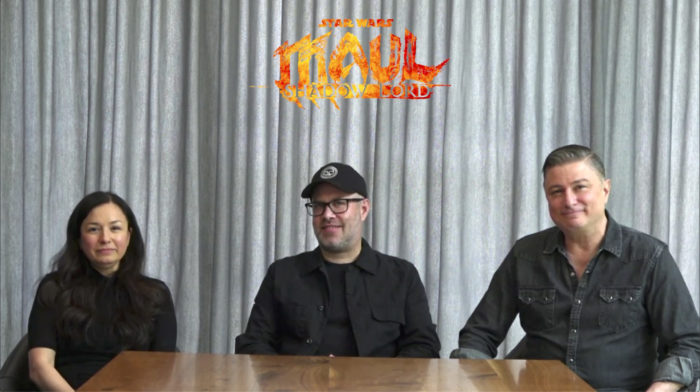
The interview is with Executive Producer Athena Yvette Portillo, Supervising Director Brad Rau, and Developer and Writer Matt Michnovetz. Referenced several times in the interview is Dave Filoni, creator and developer and Executive Producer on the show.
Questions and answers have been edited for clarity.
Question for Matt: You’ve been writing Star Wars for so long. How much of the show is David Filoni asking you to do it and how much of this is you begging for this to be made?
Matt Michnovetz: That’s a great question. It’s…it’s constant. It’s just a constant recipe. Filoni always has brilliant ideas and throwing them at us and me and this incredible team just rolling with it, and then, you know, trying to make it work.
Question for Athena: Through all this time, Star Wars Animation’s been improving and trying to get better. What was something you wanted to improve or learn through this show?
Athena Yvette Portillo: I’ve been wanting to improve the body mechanics. So the first thing we did was go into the rig to see what additional pivot points and blend shapes were necessary to give each character their own personality. I also wanted to upgrade the facial animation. We were lucky to have Sam Witwer be open to us recording him. He would actually drive from LA to here, and we would video references. We wouldn’t do mocap, but we would pass off that information to our internal animation team and to our CG animation team to try to get the emotion and nuances to come through in the character. So that was a lot of fun to do, and I’m glad we were able to do that.
Question for All: Could you tell us about the look of Jannix and what were your inspirations for the city’s landscape?
Athena: Yes, our inspiration for the city landscape was an artist by the name of Jeremy Mann, as well as the filmBlade Runner. To try to get that pulpy, painterly brushstroke look we actually would do oil on canvas matte paintings, shoot those and composite them to give it that type of feel.
Brad Rau: Yeah. It’s so cool. It’s so fun. Yeah, a lot of Syd Mead from Blade Runner we were looking at. One big thing we wanted to do is make sure that it didn’t look like Coruscant, make it feel very different and vibrant and be a character of its own as we go to different lower depths of the city and strange new areas. And it’s it’s fun. It’s a really cool place.
Matt: …and create fun set pieces for all the wild roller coaster action that we have!
Question for all: Star Wars is is very much part of this legacy of storytelling about really hopeful stories about people overcoming evil. And we have a show about a character who’s sort of known for being evil. This show managed to thread a needle of maintaining hope while centering Darth Maul. I’m wondering what conversations there were behind the scenes about threading that needle and how carefully you paid attention to that and how that construction happened?
Athena: Hope. (Dave) Filoni would always say, when we’re working on these projects to always incorporate “hope” into what you do, to bring some light to darkness. So even though he’s a villain, there’s some ways to resonate with the fact that there are mistakes that are made. The fact that there was loss of family in his, you know, childhood and all. And even though he’s seeking revenge, it is something that, you know, empathize with the revenge. You just empathize with the fact of how much he lost.
Brad: Yeah. And we have some really interesting new characters to contrast against that darkness. We like to say the hope will shine brighter against darker darkness. And this show is a great example of that. Devon Izara played by Gideon Adlon, Captain Brander Lawson, played by Wagner Moura, …there’s so many characters, but those two in particular, you know, they have their own agendas, but they’re the good guys. They’re trying to fight against the evil. So how we film that, how we wrote that, how we, you know, had the musical cues play to that was a big thing. We talked about it constantly.
Matt: Yeah, it’s always been a constant challenge, but we’ve, been threading that needle nonstop to craft this series.
Question for all: What can you tell us about the creation of our new character, Devon, in the process of developing her story alongside models during this time period? Was she always going to be a former Jedi?
Matt: It’s interesting you say that. We did have quite the evolution for that character at one point. It was it was another character. It was Brander Lawson’s son, actually. And, we pivoted from that because we found more story in what we ended up doing and challenging, to say the least. But she’s a very interesting character. She’s got this kind of devil on her shoulder in Maul.
Question: One of the standouts of the series so far is this watercolor aesthetic. At what point in the development of the series did you decide to use this visual style?
Athena: Pretty much in the very beginning, we talk about the aesthetic that we want to move the show into. Pretty much at the same time as we’re developing in the writers conference, there’s sketches that are being made. We’re talking about what films influence us, what painters artists influenced us. So those discussions are up front because you kind of have to have an idea of what aesthetic you want to move towards to make sure you stick within parameters.
Brad: And one thing too, that Dave told us early on, he wanted to see the hand of the artist in frame. Okay, Dave, let’s figure this out. Our director of lighting, Joel Aron, the math wizard that he is. He would literally paint on glass and then photograph those images and incorporate them into the flesh tones and into the effects. And so we followed Dave’s directive and it helped us develop the style.
Question: Why was now the right time to tell this story? And what challenges did you all face to bring Maul his own series?
Athena: Challenge wise, in terms of the visuals and production, I would say we upgraded about 20 to 30% of what we were doing previously. We wanted to try something new. We actually went back to old school ways of producing things by way of creating miniatures. We also did oil on canvas matte paintings that we then photographed and incorporated into the show. We upgraded the rigs for the animation body mechanics, and facial performances. So in that front, that was a challenge. But it was a fun challenge to have. So we wanted to to to kind of upgrade it into, more like cinematic sophistication.
Brad: This this show is the hardest show I’ve ever worked on. This show is the best show I’ve ever worked on. I think those kind of go hand in hand. And getting our character story is more nuanced than we’ve done on other shows, and our action is a little crazier than we’ve done on other shows. Those are really massive challenges. But it’s super fun.
Question: Is there an episode this season that stands out to you as your favorite, whether it’s because the story, the animation, or what it meant to the team behind the scenes and if so, why?
Athena: That’s a hard one because I love all of it. I would say though, the eighth episode is one of my favorites, just because it was extremely challenging and complex to achieve, and we had two rounds of creative retake notes, so we had to keep that episode open, and we were even down to the wire of lighting, doing effects even in post-production. We typically don’t do that. We’re usually like, ahead, but we felt that it was important to get everything in there for that. And going into Maul’s mental psyche in those three tonal sequences. Some of my favorite, performances from Sam and the work done by the team.
Brad: Episode ten. That’s my favorite.
Matt: And I will add that, I love them all for various reasons, but, yeah. Wait till you get to the last couple.
Question: My question is about Brander Lawson – I think he’s a brilliant character. What were the inspirations for him? He’s like a detective. He’s got the whole family thing going on. What was the inspiration for that kind of character in Star Wars?
Matt: Yeah, I mean, look, we took a lot of these touchstones from classic serials that, you know, with the DNA behind Star Wars. Then a lot of modern cinema from like Heat to The Dark Knight to The Untouchables. I think we, you know, we constantly take those touchstones. We talked about some of these characters, like the Al Pacino, Vincent Hanna character from Heat. And Lawson is, you know, one part, Batman, for Commissioner Gordon, a little John McClane from Die Hard.
Question for Brad: Directing this series, can you tell us about any specific challenges on this show versus all the other ones that you’ve directed in the past?
Brad: Yeah, they’re all a challenge. The serialized nature of this show is is new for us, and it brought its own challenges. We were talking about a little bit in some of the other answers that we normally we’ll go through the process of locking an episode, and then we move on to the next episode. We couldn’t do that. We had to keep them all terrifyingly open a little bit, so as a director, just keeping my eye on the prize so that we could tell the story as well as possible was just a challenge of it’s own. Also the action. I love action so much. And when we’re doing action right, it is a character of its own, the action set piece. So how we would take these amazing scripts from Matty and his team and design these sets and how we film them. And I still don’t know how we did some things that, you know, there were some crazy challenges all the way through, but our action was really, really difficult and really, really awesome.
Athena: I also felt like it was important to keep the episodes open because practice makes perfect. This was a whole new look for us, and I didn’t want to be in a situation where I’m like, well, episode four looks great. Gosh, I wish episode one look that way. It has to be right out the gate. So once we got into it and we understood what we were doing, halfway through, we’re like, all right, let’s go back to episode 101 and episode 102 and redo certain sequences, you know, to make sure that we have the animation correct, the look correct, does everything make sense? We also do continuity reviews where we look at the episodes over and over again to make sure we’re not missing anything in that thread. Everything makes sense. And in those continuity reviews, we have even more retakes because, you know, it’s like we have to have those contingency plans in there. So it’s done.
Matt: Plus we like keeping Brad on his toes!
Brad: But this team I mean come on, we’re having so much fun. But it’s, it’s a challenge. This is the best in the biz. Like our team is is so good. That’s the only way we can do any of this.
Athena: We’re having so much fun.
Question: You don’t often get to tell a character story. Like to deal with it this often. Like, what are the lessons learned of getting to really get into a character at a different stage?
Matt: Honestly, it’s been a challenge and we are constantly trying to sort of write ourselves into a corner and then, you know, figure out ways to get out of that, right? We drive ourselves crazy getting out of it and finding new situations, new facets, nuance and depth to Maul in addition to all these other new characters who are stuck together with him in this crazy roller coaster ride.
Athena: Sam Witwer has been a huge influence in giving the character authentic and coming up with those ideas with with Matt and Brad, and it’s been awesome to witness that collaboration.
Brad: Huge.
Question: Darth Maul met his demise in The Phantom Menace, but he returned from the dead, as we know. But since then, he’s had several fascinating stories featuring Maul. Why do you believe Maul is so popular with Star Wars fans after more than 25 years?
Brad: The mystery of Maul. You know, even as fans, when we first saw Phantom Menace… who is this guy? What is going on? And the fact that the George and Dave and Matty and Athena brought him back in The Clone Wars… I think the mystery of him is so tantalizing. And everybody loves a bad boy. Come on.
Matt: He’s so charismatic. And this wardrobe, his boots!
Question for Athena: After 20 years of Lucasfilm Animation, every season of every show seems to take a light year forward in sort of quality of production animation. How much of that comes from just how much you all have been able to produce over the years? How much are you able to reuse from show to show? Does that affect the look of things? How much are you able to build because you’ve been building it for 20 years?
Athena: It’s a very good question. We try to reuse a lot, but there comes a point where you have to ask yourself, do you want to start from scratch, or do you want to Frankenstein something? And sometimes when you Frankenstein something, it takes a lot more time and a lot more budget to get it to that point that you want to get it to. That’s why we do a lot of development. I created a system called Waves where you have like three sets of design waves to equal a pilot of a script, because the pilot is going to be the first episode where you build the entire environment, all your characters, all the props, the vehicles, the projection maps, everything that you need. You can’t just do that within 6 to 8 weeks, which is the time frame you get for one episode to design. So you get like three waves of 12 weeks to build an entire universe. There may be times where you can go to a particular grayscale like model and not use the textures from like rebels or from Clone Wars, and then read texture to get that painterly look. But it’s, rather do it from scratch to get it right. So the technology changes are different, like versions of Maya out there, like Houdini and all of that that we have to use. And we also have our internal proprietary tools that we utilize as well. But, every show has been a challenge, but I have to say, this one has been the most fun, but the most challenging that the joke I say is, if I were to get hit by a bus or a plane goes down, this would be the best show like in my book, that I’d be happy to say that I’ve been a part of, you know? And I always say that that’s why everybody calls me morbid because I’ll talk to Alex Spotswood, who was our co-Executive Producer. I’m like, dude, if I get hit by a bus tomorrow, I got to tell you where the budget is right now, where all those EFC’s (Estimated Final Cost) are. So we talk about those things every day.
Matt: Keep her away from busses!
Athena: No busses and no planes!
Brad: I just got to say, Athena is the best producer. We can dream up all kinds of crazy stuff.
Matt: And we do.
Brad: And we do. But there’s no way we could. I mean, we were just talking about it today. Is there any thing we’ve dreamt up we couldn’t do? The answer is no, because Athena is incredible.
Athena: It takes a village. It takes a whole team. And to answer your question too, we work with a lot of the same people in the last 20 years. And again, it’s it’s an internal family. The more you do it together, the more you understand the flow. You speak each other’s language. Everything becomes like an assembly line. And we just love doing what we’re doing.
Star Wars: Maul – Shadow Lord is streaming now on Disney+
